
How AI Keeps Call Centers Compliant — Without Slowing Agents Down
AI helps call centers meet compliance requirements automatically, reducing risk, audit pressure, and manual QA without hurting agent performance.
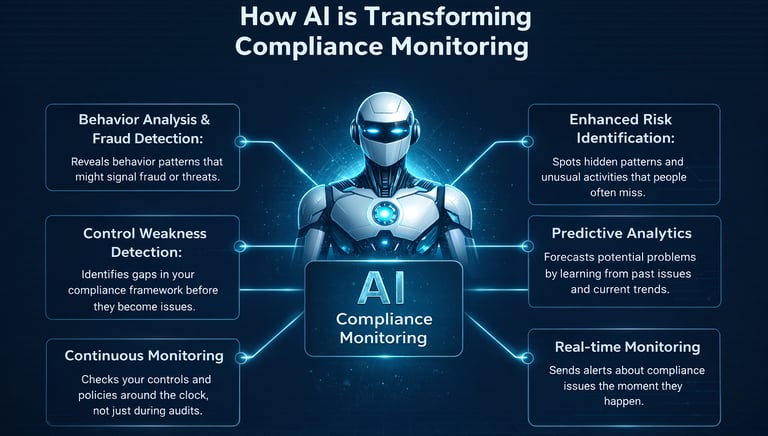
Introduction: Compliance Can’t Be Optional — But It Also Can’t Kill Productivity
In modern call centers, compliance is no longer a box to check after the fact. Regulations around data privacy, consent, disclosures, and call handling are stricter than ever — and enforcement is real.
The problem?
Traditional compliance processes slow agents down, rely on tiny call samples, and create massive blind spots.
This is where AI-powered call center compliance changes the equation.
AI allows organizations to monitor 100% of interactions, enforce rules consistently, and surface risk in real time — without adding friction to the agent workflow.
This article explains how AI-driven compliance works in practice, what problems it solves, and why it’s becoming a core layer of modern call center operations.
What Call Center Compliance Really Means Today
Call center compliance today goes far beyond simply avoiding the wrong words on a call. Organizations are expected to enforce a wide range of rules that touch nearly every part of the customer interaction. These include how personal data is handled, how and when consent is obtained, which disclosures must be delivered, how scripts are followed, how conversations are documented, and how easily records can be produced during audits.
The real difficulty lies in scale. Human reviewers can only analyze a tiny fraction of total interactions, often no more than one to three percent. That means the vast majority of conversations are never checked, even though they carry the same regulatory risk. As volumes grow and channels multiply, this gap becomes impossible to manage manually.
AI changes compliance from an occasional review process into a continuous one. By automating analysis and monitoring, compliance becomes proactive instead of reactive, identifying risks as they emerge rather than weeks later.
Why Traditional Compliance Slows Call Centers Down
Legacy compliance models were built for a different era. They rely on:
Random call sampling
Manual QA reviews
Delayed feedback loops
Subjective scoring
Heavy analyst workload
This creates three major problems:
Blind spots — Most interactions are never reviewed
Delayed risk detection — Issues surface weeks after they happen
Agent friction — Feedback feels arbitrary and disconnected
Compliance becomes something agents fear — not something that helps them improve.
Key Ways AI Improves Compliance Without Slowing Agents
1. Full Interaction Coverage (No Sampling)
AI analyzes 100% of calls, chats, and messages.
This eliminates the biggest compliance risk: what you don’t review.
Every interaction is checked against the same rules, with no exceptions and no fatigue.
2. Real-Time Risk Detection
AI can flag issues such as:
Missing disclosures
Improper consent language
Prohibited phrases
Escalation triggers
This allows supervisors to intervene during or immediately after the interaction — before issues turn into legal exposure.
3. Consistent Rule Enforcement
Humans interpret rules differently. AI doesn’t.
Compliance criteria are applied uniformly, ensuring:
No bias
No inconsistency
No reviewer drift
This is especially critical during audits, where consistency matters more than opinion.
4. Automated Audit Trails
AI automatically creates:
Time-stamped transcripts
Compliance flags
Decision logs
Interaction summaries
This produces a ready-made audit trail, dramatically reducing prep time for regulators, legal teams, and internal reviews.
AI Compliance and Quality Assurance Work Better Together
Modern AI systems don’t separate compliance from quality assurance.
Instead, they evaluate both at once:
Was the interaction compliant?
Was it effective?
Did it follow process?
Did it resolve the issue?
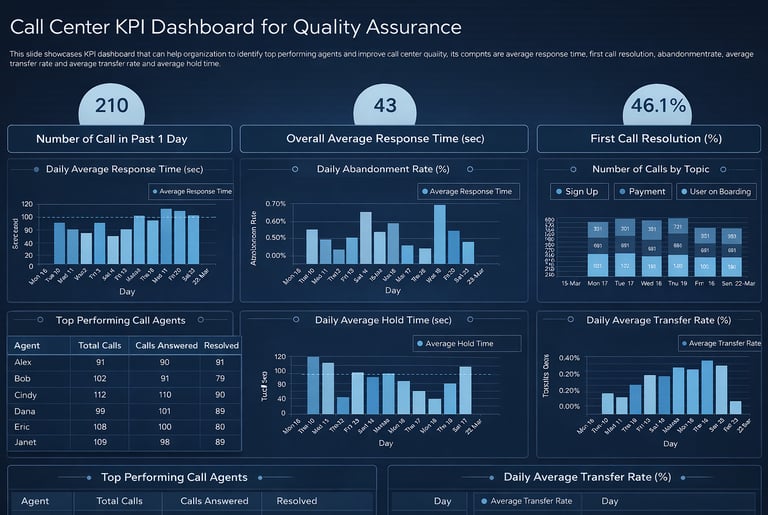
This unified view allows leaders to connect compliance directly to:
CSAT
First Call Resolution (FCR)
Handle time
Escalations
Revenue outcomes
Compliance stops being a blocker — and starts becoming a performance lever.
The Business Impact of AI-Driven Compliance
Organizations that adopt AI for call center compliance consistently report lower regulatory exposure, faster audit readiness, reduced quality assurance workload, higher agent productivity, and improved customer experience. More importantly, compliance stops being viewed as an operational tax and starts functioning as a competitive advantage.
Final Thoughts: Compliance at Scale Requires Intelligence
As call volumes grow and regulations tighten, manual compliance simply doesn’t scale.
AI makes it possible to:
Monitor everything
Act faster
Reduce risk
Support agents
Stay audit-ready
And it does all of this without slowing operations down.
For modern call centers, AI-powered compliance isn’t a nice-to-have — it’s infrastructure.
How AI Automates Call Center Compliance
How AI Protects Agents Instead of Policing Them
A common misconception is that AI compliance exists to catch mistakes. In practice, well-implemented AI does the opposite. By reducing manual scrutiny and replacing subjective reviews with objective analysis, AI creates a fairer and more transparent environment.
Agents benefit from clearer expectations, data-driven feedback, and coaching that is timely and relevant. The fear of random audits disappears, replaced by consistent standards applied equally to everyone. Performance reviews feel more accurate, and coaching becomes more constructive.
This shift is critical for adoption. When agents see AI as a support system rather than a threat, resistance drops and long-term success becomes far more likely.
AI-powered compliance platforms work by analyzing every customer interaction across voice and digital channels.
They typically combine:
Speech-to-text transcription
Natural language processing (NLP)
Machine learning models
Rule-based compliance frameworks
Instead of reviewing calls after the fact, AI evaluates them as they happen or immediately after — without human intervention.
Data Privacy and Regulatory Alignment
AI compliance platforms are designed to support strict regulatory environments, including data privacy frameworks, consent and disclosure requirements, and industry-specific regulations in sectors such as finance, insurance, and healthcare. When properly configured, these systems ensure sensitive data is monitored consistently, logged securely, and audited transparently.
This significantly reduces both legal and reputational risk, especially for organizations operating across multiple locations or outsourcing parts of their call center operations.
How to Decide What Your Call Center Needs
Successful adoption follows a clear pattern:
Assess current compliance gaps
Define clear rules and risk signals
Start with monitoring, not enforcement
Integrate AI into existing workflows
Use insights for coaching, not punishment
The goal isn’t control — it’s visibility and prevention.
About ManuOps
This blog explores how artificial intelligence is improving modern call centers, with a focus on real-world applications, customer experience, and human–AI collaboration.
Contact
Questions? Reach out anytime.
Links
contact@manuops.io
© 2025 ManuOps. All rights reserved.